
Reviewed · FAMAGUSTA & VAROSHA TRIPS
A Day Trip to Medieval FAMAGUSTA (Kyrenia, Nicosia or Famagusta )
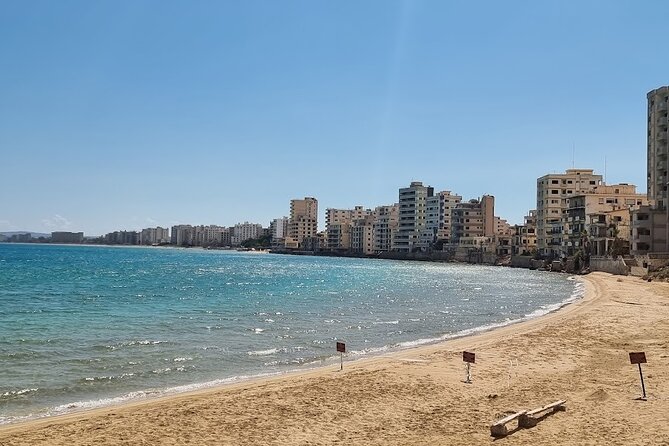
Famagusta’s abandoned Varosha quarter is the emotional heart of this day. Hotels and homes were left behind in 1974, and part of the area reopened 46 years later. Seeing it alongside the old city’s Gothic cathedral and the Roman ruins at Salamis gives you a sharper sense of Cyprus as a place shaped by many rulers.
I like the private format, which lets you ask questions and set a comfortable pace with your own guide. I also like the route itself: St. Barnabas, Salamis, medieval Famagusta, and Varosha cover religion, ancient Cyprus, Gothic architecture, Ottoman rule, and the island’s divided modern story in one long day.
The main consideration is time. Seven hours sounds generous, but the route includes several major stops, and the advertised stop lengths add up to more than the tour’s stated duration. Lunch is not included, and pickup outside central Kyrenia or Famagusta may cost extra.
Key points to know before booking
- Varosha gives the day its strongest modern-history focus: See an abandoned resort district alongside Famagusta’s living old town.
- St. Barnabas includes two hours on site: Visit the saint’s tomb and an icon museum with a private guide.
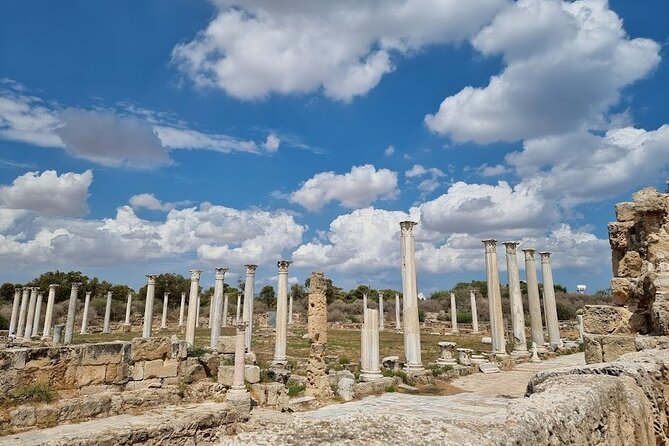
- Salamis is a compact ancient-site visit: You have about an hour for the gymnasium, theatre, and Roman baths.
- Famagusta’s cathedral became a mosque: Lala Mustafa Pasha Mosque shows how the city’s rulers changed its buildings without erasing their earlier form.
- The tour suits a small group: One price covers up to four people, with a private driver-guide and included historical-site tickets.
- Sirin may be your guide: She is praised for adding humor, local warmth, and clear explanations, especially at Varosha.
Why this route tells Cyprus so well
I like this outing because it does not treat Famagusta as just another old town. You begin with faith and legend at St. Barnabas, move into the ancient world at Salamis, walk through a medieval city, and finish with the unresolved story of Varosha.
That sequence matters. Cyprus can feel like a stack of separate historical periods, but this route puts them next to one another. You see how Christianity, Greek mythology, Roman public life, Lusignan Gothic design, Venetian defenses, Ottoman rule, and the events of 1974 all meet in one corner of the island.
The private guide makes a real difference here. A guide such as Sirin can explain why a former cathedral is now a mosque, who Namık Kemal was, and what happened to Varosha without forcing your group to follow a fixed public-tour script. You can ask for more history, less walking, or extra time at the place that catches your attention.
The route is still ambitious. The listed stops include two hours at St. Barnabas, one hour at Salamis, and about an hour each for the walled city, the mosque, Namık Kemal’s prison museum, and Varosha. That is a lot to fit into roughly seven hours, especially with driving and a meal. Think of this as a broad introduction, not a slow study of every monument.
More Famagusta and Varosha visits:
- Ghost-Town Famagusta Mini Bus Tour from Protaras and Ayia Napa
★ 4.5 · 298 reviews - Full-day Famagusta: Lost Cities & Coastal Secrets from Paphos
★ 4.5 · 274 reviews - Red Bus Varosha experience in English from Ayia Napa, Protaras
★ 4.5 · 88 reviews
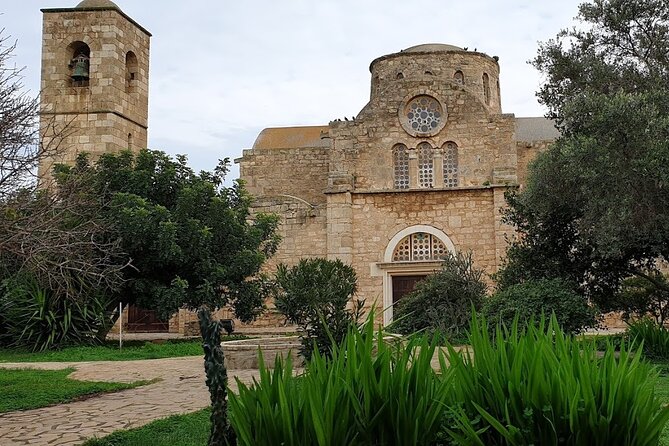
St. Barnabas Monastery and the saint’s hidden tomb
The day begins with a drive toward the northeast of Cyprus and a two-hour visit to St. Barnabas Monastery and Icon Museum. This is the longest stop, and rightly so. It combines a religious site, a local legend, and a small museum in one place.
Barnabas was Jewish and went to Jerusalem for higher study. After accepting Christianity, he returned to Cyprus and began spreading the faith. According to the story told here, opponents killed him, and believers buried him in a cave beneath a carob tree. Later, those believers were driven away toward Egypt, and the tomb’s location was forgotten for decades.
Your guide explains how the tomb was found, then takes you to see it. That physical connection makes the story easier to grasp than a quick explanation from inside a bus. The monastery visit also gives you a chance to ask about Barnabas, early Christianity, and the role of Cyprus in the spread of the faith.
The Icon Museum adds another layer. The tour information does not give a detailed inventory of its collection, so you should expect a focused visit rather than a major museum experience. The value is in seeing the monastery, tomb, and icons together, with someone to explain what you are looking at.
Allow yourself to dress and behave respectfully at this religious site. The tour includes admission, and the pace is private, but this remains a place of worship and pilgrimage, not just a photo stop.
Salamis, where myth meets Roman public life
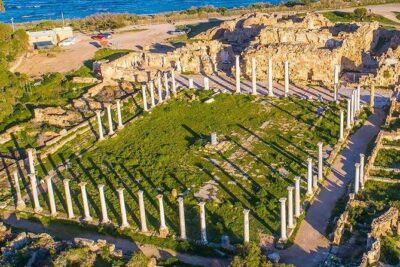
After St. Barnabas, you continue to Salamis for about an hour. The ancient city’s mythical foundation is linked to Teucer, a hero of the Trojan War. He was exiled from the Greek island of Salamis after failing to protect his half-brother Ajax, then sailed to Cyprus and gave the new kingdom its name.
You do not need to accept every part of the legend literally to enjoy the site. It shows how ancient communities used stories to explain their origins and connect themselves to the wider Greek world.
The visit focuses on major remains such as the gymnasium, theatre, and Roman baths. These are not isolated stones with no context. Together, they show the public side of ancient life: exercise and education, performances, bathing, and the civic spaces that helped a city function.
One hour is enough for a guided overview of the main highlights, but not for a slow archaeological examination. Wear comfortable shoes and expect uneven ground. The tour requires a moderate level of physical fitness, and Salamis is one reason why.
Your guide’s role is especially useful here. Without context, ruins can blur together. With a clear explanation, the gymnasium becomes part of daily life, the theatre becomes a place for public entertainment, and the baths reveal the Roman taste for large shared facilities.
Walking inside Famagusta’s medieval walls
The next stage is Famagusta’s walled old city. Lusignan rulers first surrounded the city with walls, and the Venetians later added to its defenses. As you walk, you see traces of several communities and ruling powers rather than one neat historical style.
This is the point where the private tour feels most flexible. A walking tour through a medieval city works best when you can stop to look up at a doorway, ask about a carved detail, or pause in a square without worrying about a large group.
The city’s architecture also raises difficult questions about change. Buildings were constructed for one purpose and then adapted by later rulers. The clearest example is Lala Mustafa Pasha Mosque, but the same pattern runs through Famagusta’s streets.
The one-hour estimate for the walled city is a brisk introduction. You will see key sights, but you should not expect to inspect every church, gate, and defensive feature. If medieval architecture is your main interest, tell your guide early so the walking portion can match your priorities.
A few more Cyprus half-days to weigh up
- NORTHERN CYPRUS ALL-IN-ONE Private Day Trip from Nicosia
★ 5.0 · 89 reviews - Aphrodite’s Birthplace, Lefkara & Kourion Day Trip from Paphos
★ 4.0 · 20 reviews - Paphos: Aphrodite’s Birthplace, Lefkara & Kourion Day Trip
★ 4.1 · 9 reviews - Day Trip to the Paphos amazing sides from Limassol.
★ 5.0 · 6 reviews
Lala Mustafa Pasha Mosque and a Gothic cathedral’s second life
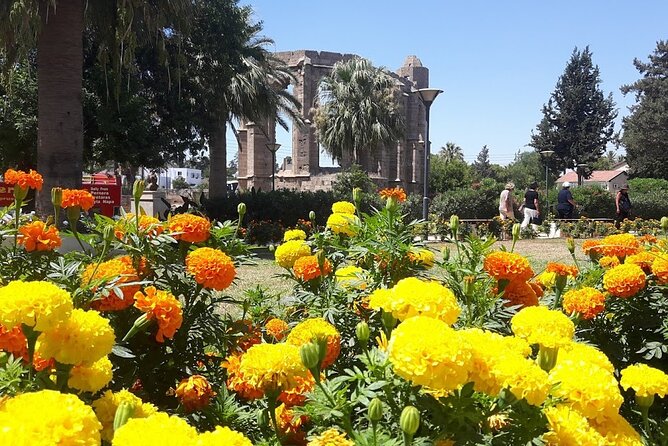
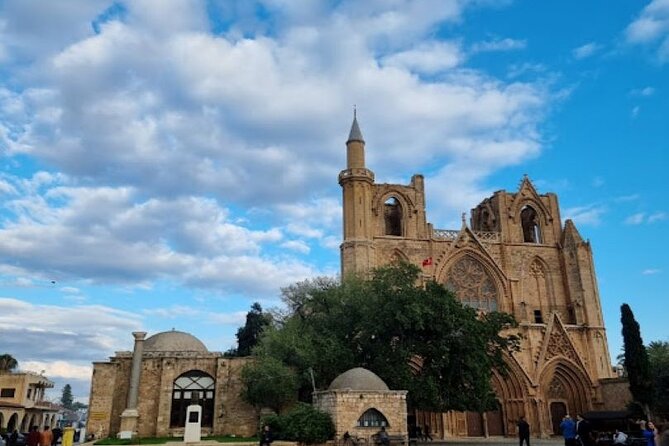
Lala Mustafa Pasha Mosque began life as St. Nicholas Cathedral, built by the Lusignans between 1298 and 1312. Its Gothic design reflects the city’s links with the medieval kingdom that crowned its rulers as Kings of Jerusalem.
When the Ottomans took Cyprus, they converted the cathedral into a mosque and added a minaret. The building is still used as a mosque today. That change is not a minor detail. It is the clearest visual lesson in Famagusta: conquest often changes a building’s use while leaving much of its earlier structure in place.
Look closely at the Gothic facade, then notice the Islamic addition. Your guide can help you read the building as both a cathedral and a mosque, rather than forcing it into only one category.
The stop lasts about an hour and admission is free. A Ficus sycomorus tree beside the building is said to date to 1299, making it an unusual companion to the architecture. The tour information identifies it as a noteworthy old tree, though the exact way its age was established is not explained.
Because the building remains an active mosque, access and conduct can depend on religious use. Follow your guide’s instructions, dress with respect, and do not assume every interior area will always be open.
Namık Kemal’s prison in the Venetian palace
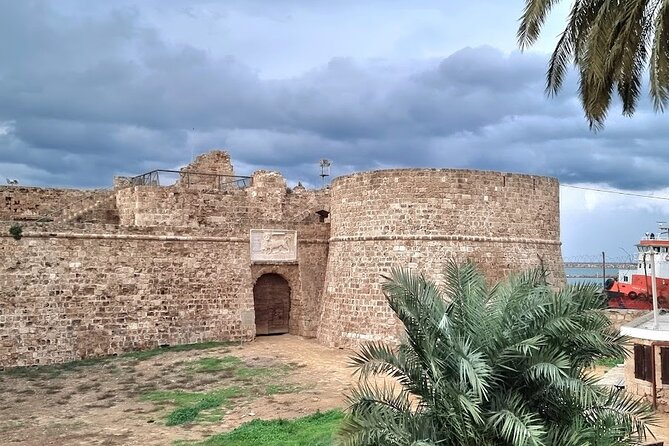
Famagusta’s history did not end with the medieval period. During Ottoman rule, the city was used as a place of exile. Namık Kemal, a writer who opposed the Sultan, was imprisoned here for 38 months.
His prison is located within the Venetian palace. The stop gives you a more personal way to understand Ottoman Famagusta. Instead of focusing only on rulers and battles, you hear about a writer, his political position, his books, and the consequences of opposing authority.
The museum visit lasts about an hour and admission is free. A statue of Namık Kemal faces the square named after him, and the statue was replaced in 1953. These details help you see how later generations chose to remember him.
This stop will appeal most if you enjoy social and literary history. If your main goal is ancient ruins, it may feel less essential than Salamis. Still, it breaks up the architectural sightseeing and shows how Famagusta remained politically useful long after the medieval era.
Varosha, the abandoned resort quarter
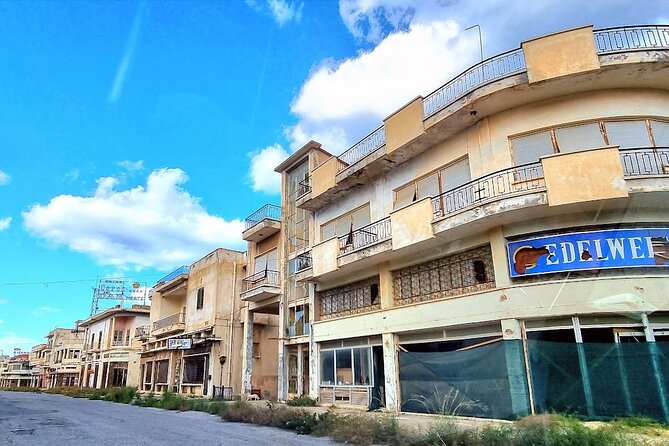
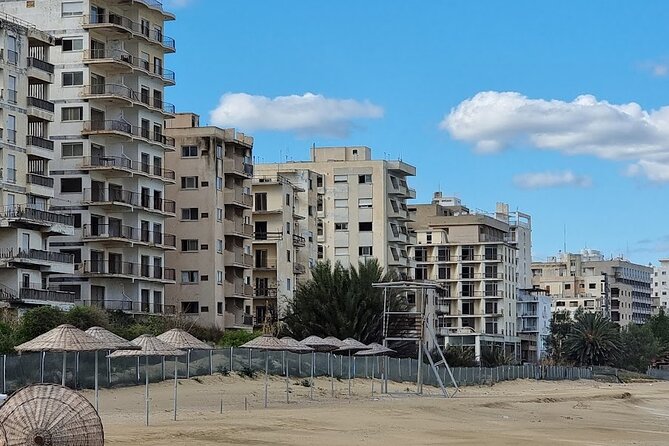
Varosha is the stop that gives this day its modern weight. Once filled with hotels, homes, and holiday activity, the district was abandoned in 1974. After 46 years, it reopened in part, allowing people to walk through an area that had been closed for decades.
Your guide explains what the quarter was like before it was abandoned and what happened afterward. The sight is not simply an unusual photo opportunity. It is a reminder that political division can freeze ordinary buildings in time, leaving behind streets designed for daily life and tourism but no longer used in the same way.
The walking visit lasts about an hour. Because the subject is politically sensitive and personally painful for many people, a good guide matters here. Sirin is especially associated with warm, clear explanations of Varosha and with making the history understandable without turning it into a dry lecture.
Keep your expectations measured. The tour description does not promise access to every part of the former resort area, so you should expect a walk through the area that is open rather than a full exploration of every abandoned hotel and street.
For many people, this will be the day’s most memorable stop. It gives the earlier history a modern frame: cities change hands, buildings change purpose, and political events can alter daily life for generations.
What the private price includes
The price is $360.07 per group of up to four people. That makes the per-person cost about $90 when four people share, or about $180 each for two. The price includes a private driver-guide, fuel surcharge, bottled water, hotel pickup and drop-off in the stated service area, and tickets for the historical sites.
For a couple, this is not a budget outing. For four people, the value is much better, especially because you are not paying separate admission fees at St. Barnabas or Salamis and you get a private vehicle and guide for the day.
The strongest value is the combination of transportation and explanation. Reaching these sites independently would require arranging transport across a wide area and working out how to connect the monastery, ruins, old city, and Varosha. Here, the route is handled for you, and the guide can connect the sites into one story.
Lunch is not included. The guide has taken groups to a local restaurant and was known by people there, but that is not presented as a fixed part of the tour. Ask about lunch during the drive, and budget for it separately.
Pickup is offered from centrally located hotels in Kyrenia. Pickup from Famagusta is also included in the tour details, while other cities may involve an extra charge. The listed meeting point is Bella View Art Boutique Hotel in Ozankoy, and the usual start window is between 9:30 and 10:00 a.m.
Who should book this Famagusta day trip?
I would choose this tour if you want to see several major sites in northern Cyprus without arranging a car, and if you prefer asking questions in a private setting. It is particularly useful for first-time visitors who want a clear introduction to Famagusta’s ancient, medieval, Ottoman, and modern chapters.
It also suits families or friends who can share the group price. A private tour lets you manage your own pace better than a large coach excursion, though the packed route still requires steady walking and attention.
You may want something else if you prefer spending half a day at one archaeological site, want a slow lunch, or dislike moving between many stops. The day is designed for range. You will see more places, but each receives a limited amount of time.
Confirmation is provided at booking. The experience is non-refundable and cannot be changed after purchase, so check your dates, hotel location, and group size carefully before paying.
Should you book it?
Book this Famagusta day trip if Varosha interests you, you want a private guide, and you value historical context more than free time. The combination of St. Barnabas, Salamis, the Gothic mosque, Namık Kemal’s prison, and the abandoned quarter is unusually broad.
I would be most inclined to book it for four people, when the group price becomes easier to justify. If Sirin is available, her warm style, humor, and strong grasp of Cyprus history are clear reasons to request her.
Skip it if you want a relaxed archaeological day or a fully included lunch. For everyone else, this is a practical way to cover the northeast of Cyprus in one day, with Varosha providing the lasting impression.
FAQ
How long does the Famagusta day trip last?
The tour lasts approximately seven hours, including the sightseeing program and transfers.
Where can pickup be arranged?
Pickup is offered from centrally located hotels in Kyrenia. The tour details also mention pickup from Famagusta, while pickup from other cities may cost extra.
Is the tour private?
Yes. Only your group participates, with a private driver-guide. The price covers up to four people.
Is hotel drop-off included?
Yes, hotel pickup and drop-off are included for the stated service area and selected hotels.
What time does the tour start?
The listed start window is from 9:30 a.m. to 10:00 a.m., Monday through Sunday.
Are entrance tickets included?
Yes. Tickets for the historical sites are included, including St. Barnabas Monastery and Salamis. The Famagusta walking stops have no admission charge listed.
Is lunch included?
No. Lunch is not included in the price.
How much walking is involved?
You need a moderate level of physical fitness. The route includes walking through Salamis and the medieval walled city, as well as visits to Famagusta’s main sights and Varosha.
Can I cancel or change the booking?
No. The experience is non-refundable and cannot be changed for any reason after booking.
Just added around Cyprus
- Pafos and Kourion Coach Excursion in Italian★ 4.0 · 3 reviews
- Private cruise with a sailing yacht Koursaros★ 5.0 · 3 reviews
- Taxi transfer from LCA airport to Ayia Napa or Ayia Napa to LCA airport★ 5.0 · 3 reviews
- Luxury Wine tasting at your place in Cyprus★ 5.0 · 3 reviews
- Troodos Mountains Villages with Lampadistis Monastery from Paphos★ 3.5 · 4 reviews
- Watch the stunning sunset over the Akamas on a luxury Speedboat.★ 5.0 · 4 reviews
- Private Full-Day Tour in Larnaca with Hotel Pick Up★ 5.0 · 4 reviews
- Self Drive from Latchi to Blue Lagoon Boat Rental★ 5.0 · 4 reviews
Famagusta & Varosha Trips, compared.
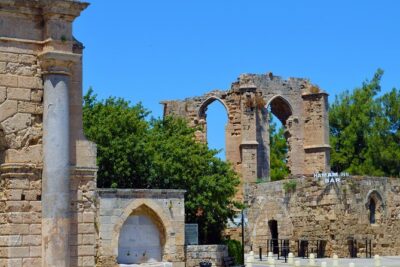
Ghost-Town Famagusta Mini Bus Tour from Protaras and Ayia Napa
Read our review →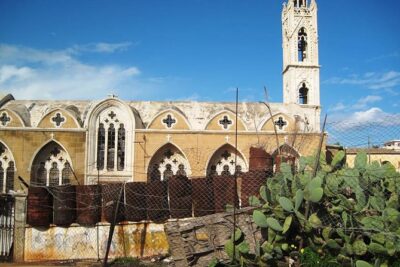
Full-day Famagusta: Lost Cities & Coastal Secrets from Paphos
Read our review →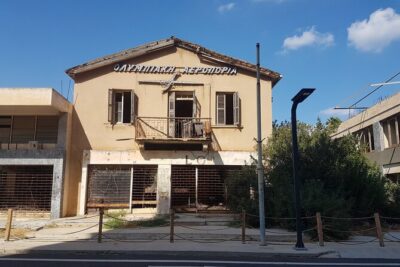
Red Bus Varosha experience in English from Ayia Napa, Protaras
Read our review →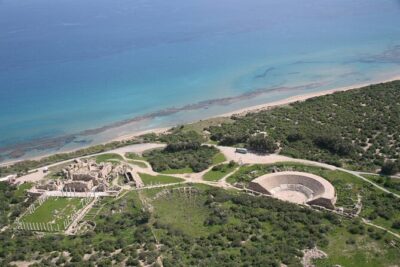
Day Tour to Famagusta, Ghost Town & Ancient Salamis
Read our review →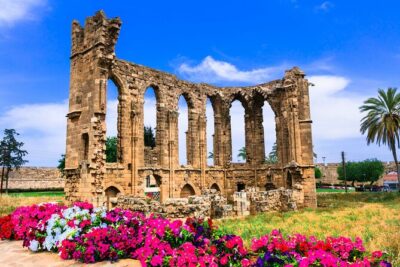
Famagusta and Blue Lagoon Jeep Safari from Protaras
Read our review →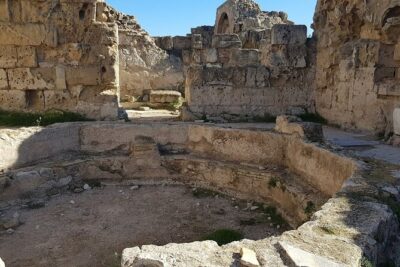
From Nicosia and Kyrenia: Famagusta & Kyrenia as Circular Tour
Read our review →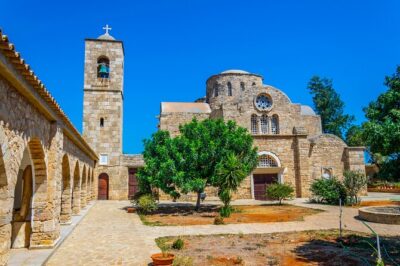
From Ayia Napa: Famagusta City Tour with Salamis and Varosha
Read our review →Browse the lists this tour appears in