
Reviewed · NICOSIA DIVIDED-CAPITAL TOURS
Divided Capital NICOSIA
Nicosia is a city split by a border, and this private walk lets you see that divide up close rather than treating it as a line on a map. In about three hours, you move between the Greek Cypriot and Turkish Cypriot sides, passing Ottoman houses, a former Gothic cathedral, Venetian remains, old city gates, and the modern checkpoint on Ledra Street. Guide Sirin is praised for her patient, friendly approach and her ability to explain Cyprus across several centuries.
I like two things in particular: the private format, which lets your guide adjust the pace and answer your questions, and the pause at Büyük Han, where you can sit down with Cypriot coffee and traditional borek. The main thing to consider is that the tour gives more historical depth on the northern side than on the southern side, so visitors wanting an equally detailed account of both communities may want to add a separate museum visit.
Key points to know before booking
- You cross between two sides of Nicosia: The route begins and ends at the Ledra Street crossing point and includes both Greek Cypriot and Turkish Cypriot areas.
- The tour is private for up to four people: The $216.86 price covers the group, not each individual.
- Sirin is a highly praised guide: Her style is described as attentive, patient, friendly, and especially strong on Cypriot history and culture.
- Büyük Han provides the natural break: You have time to stretch your legs and enjoy Cypriot coffee and borek, although lunch is not included.
- Bring a valid passport: You must show it at the checkpoints.
- Expect a history-heavy walking tour: The route is best for people who want context, not just quick photographs.
Why divided Nicosia is worth your morning

Nicosia is not simply an old town with attractive buildings. It is Cyprus’s divided capital, and the border is part of daily life, politics, memory, and movement through the city. This tour gives you a guided way to look at that division while also showing how many earlier powers left their mark.
The route covers Venetian defenses, Ottoman housing, Lusignan Gothic architecture, religious change, and modern border crossing arrangements. That combination makes the experience more useful than a standard old-town stroll. You are not only looking at one period. You are watching the city change hands and identities over time.
The private setup matters here. A group of four can ask about architecture, religion, the border, or local customs without waiting for a large party to catch up. The tour is offered in English, and the guide can give personal attention throughout the walk.
At $216.86 per group, the price looks high if you are alone. For four people, it works out to about $54 per person before any food or drinks, which is a fairer comparison with other private guided walks. The value comes from the guide’s time and the ability to cover both sides of the capital in one compact morning.
More walks across the divided capital:
- Nicosia: Green Line and Buffer Zone Guided Walk
★ 5.0 · 147 reviews - Nicosia: Last Divided City, Tour combining South & North
★ 5.0 · 11 reviews - Lefkara & Nicosia’s Divided Past & Present from Paphos
★ 4.0 · 80 reviews
Starting at the Ledra Street crossing
The tour starts at Ledras in central Nicosia, at the Ledra Street crossing point, and ends at the same place. That makes the meeting point easy to understand, but it also means you need to plan around the crossing rather than treating it as a casual detail.
Bring a valid passport. The tour information specifically says passports must be shown at the checkpoints, so do not leave yours at your hotel or assume another form of identification will be enough.
The stated schedule is Monday through Saturday from 9:00 a.m. to 1:00 p.m., with the activity lasting about three hours. The available timing gives you room to continue exploring or stop for lunch afterward. Sirin has also offered restaurant suggestions after the walk, a useful extra if you are still deciding where to eat.
The program is offered only in English. Children under 12 must be accompanied by their parents. Service animals are allowed, and the meeting point is near public transportation.
Kyrenia Gate and the old city walls
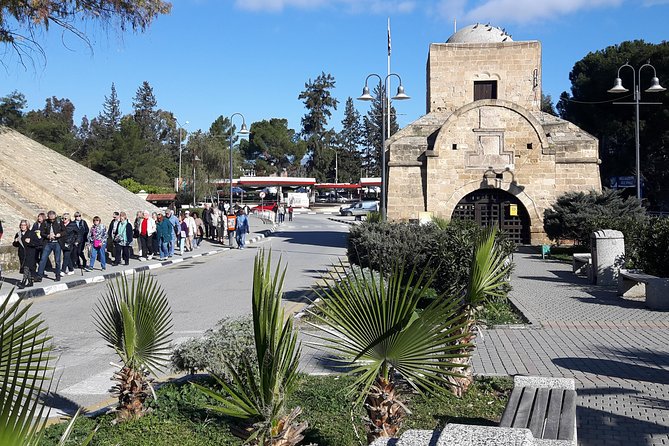
The first stop is Kyrenia Gate, one of the oldest entrances through Nicosia’s walled city. You spend about 20 minutes here, which is enough time to take in the gate and hear how the fortifications shaped movement through the capital.
An old gate is more than a photogenic arch. It tells you that Nicosia was once a protected city with controlled entrances, and it gives you a useful starting point for understanding the walls around the historic center.
Because admission is free, the value of this stop comes from explanation rather than access to a paid site. Your guide can point out what you are seeing and place the gate within the wider story of Venetian and Ottoman Nicosia.
Samanbahçe Quarter and its 72 homes
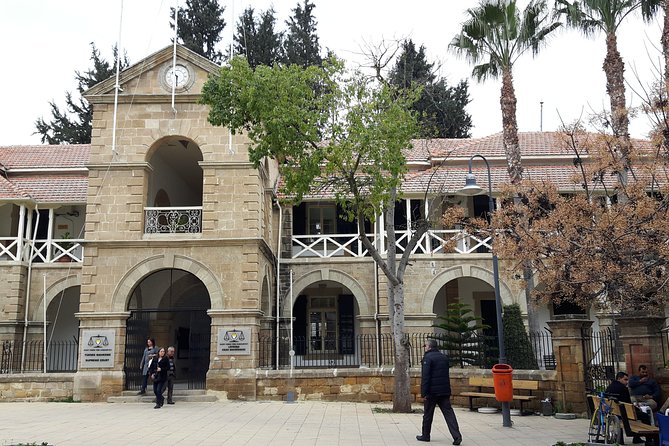
The Samanbahçe Quarter offers one of the more human stops on the route. Built in 1900 by Ottoman official Saban Pasa, it contains 72 houses that were given to people in need.
The quarter also has a cistern in the center. That practical feature helps you see how an urban neighborhood once handled water and shared space. Instead of focusing only on palaces and monuments, the tour brings you into an area designed for ordinary residents.
You have about 10 minutes here. That is a short stop, but it adds balance to the grander religious and military buildings later in the morning.
A few more Nicosia half-days to weigh up
- 3-hour Nicosia Segway Tour
★ 5.0 · 323 reviews - NORTHERN CYPRUS ALL-IN-ONE Private Day Trip from Nicosia
★ 5.0 · 89 reviews - Walking City Tour Nicosia North
★ 5.0 · 78 reviews - Kyrenia Tour (only from Nicosia/Kyrenia Hotels)
★ 5.0 · 22 reviews
The Venetian Column and a relocated symbol
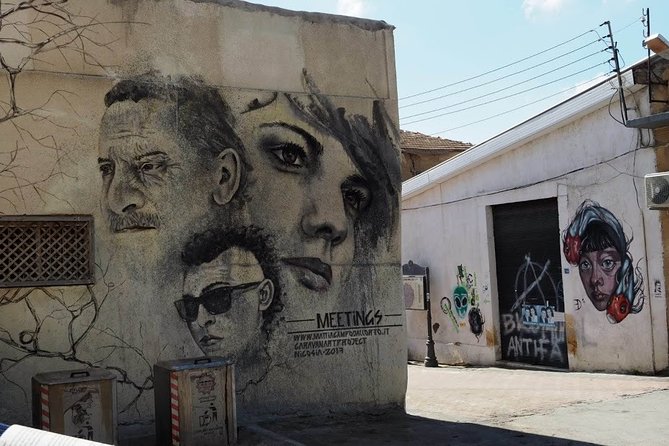
The Venetian Column takes about 10 minutes. It was brought to Nicosia from the ancient city of Salamis during the Venetian period, and a Lion of St. Mark once sat at the top.
That detail gives the monument a layered story. The column connects ancient Cyprus, Venetian rule, and the political symbols used by Venice. It is also a reminder that old cities often reuse materials and monuments from earlier places.
This is the kind of stop that can be easy to miss without a guide. On its own, a column may look like a simple relic. With context, it becomes evidence of how rulers marked their presence and reshaped the city.
Selimiye Camii, a cathedral turned mosque
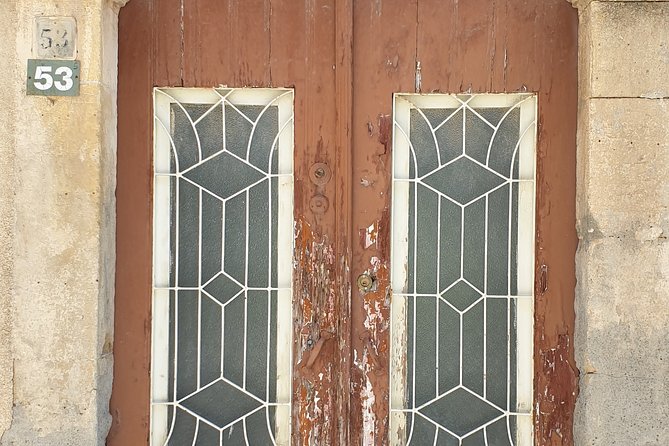
Selimiye Camii is one of the most striking stops because its building history crosses religious and political boundaries. The Lusignans built it as a cathedral in a Gothic style. After the Ottomans arrived in Cyprus in 1570, minarets were added and the cathedral was converted into a mosque.
The building was known as Agia Sophia Mosque until 1956, when it was renamed Selimiye Mosque. That change in name is another small clue to the way Cyprus’s public identity has shifted.
You spend about 20 minutes here. The guide’s explanation is especially useful because the architecture alone may not tell you how the building changed function. Look for the contrast between Gothic forms and later Islamic additions. You are seeing several chapters of the island’s past in one structure.
The stop is also a good place to keep an open mind. The building carries different meanings for different communities, and a thoughtful explanation helps you understand that without reducing the story to a simple before-and-after account.
Büyük Han and the tour’s coffee break
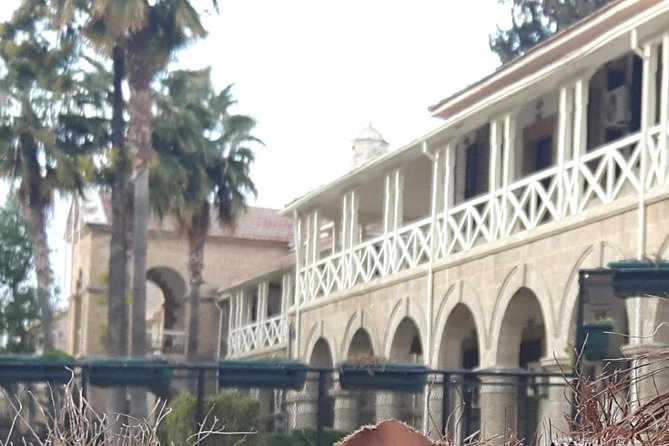
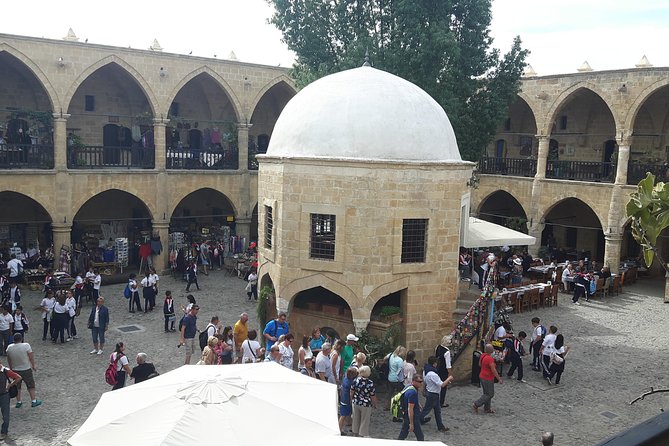
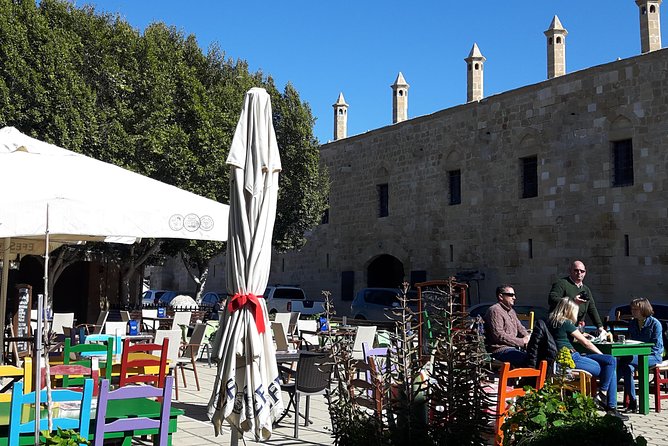
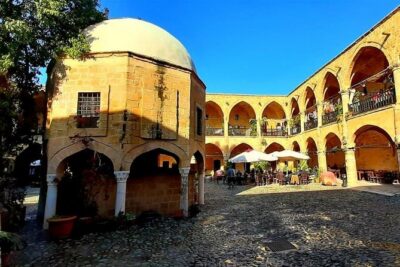
Büyük Han is given the longest single stop, about 40 minutes, and for good reason. Built in 1572 by Muzaffer Pasha, it was designed as a traditional inn. A cistern and mescit sit at its center, and the building now serves as one of Nicosia’s most appealing historic gathering places.
This is where the walking tour relaxes. You can stretch your legs, order Cypriot coffee, and try traditional borek. Lunch is not part of the price, so think of this as a short refreshment break rather than a meal.
I like this pause because it gives the morning a human rhythm. Three hours of monuments and political history can become tiring. Sitting in a historic courtyard lets you absorb what you have seen and ask your guide follow-up questions.
The break is also useful for families and mixed-interest groups. Someone who wants a quiet coffee gets one, while a history-minded visitor can continue asking about Ottoman urban life. Just remember to budget separately for food and drinks.
Famagusta Gate and the city’s defenses
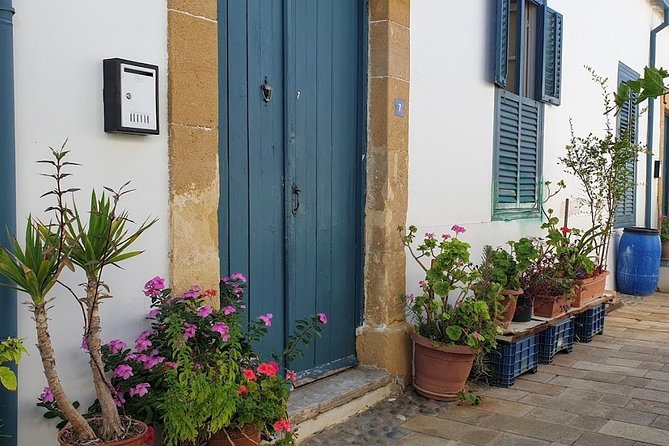
The route then reaches Famagusta Gate, one of the three gates surrounding Nicosia. The planned stop lasts about 40 minutes, including walking by the gate, taking photographs, and hearing its story.
The longer time here suggests that this is not just a quick photo stop. You have a chance to consider how the gates controlled access to the walled city and how the defenses shaped the city’s growth.
The exact amount of walking may feel different depending on the group’s pace. The tour covers a lot in a short time, so comfortable shoes are a sensible choice. The experience is described as a walking tour, and the route includes several historic areas rather than one enclosed attraction.
Archbishop’s Palace and the southern side
At the Archbishop’s Palace, you stop for photographs and hear about the building’s history. The stop lasts about 20 minutes and adds a view of the Greek Cypriot side of Nicosia.
This is also where you should set your expectations carefully. The tour gives strong coverage of the Turkish Cypriot side, especially its older neighborhoods and Ottoman-era monuments. One past participant felt the explanation of southern Nicosia was less detailed than the guide’s command of the north.
That does not make the southern portion unhelpful. It means you may want to treat it as an introduction rather than a complete study of Greek Cypriot Nicosia. If the southern side matters greatly to you, use the tour as a framework and allow extra time afterward for independent sightseeing.
What the private guide adds
A good guide is particularly valuable in Nicosia because the city’s history can be politically sensitive and architecturally mixed. The same street may carry Ottoman, Venetian, Christian, Muslim, and modern national associations.
Sirin is the guide most often identified with this experience. She is described as attentive, patient, friendly, and well informed about Nicosia, Cypriot history, and local culture. Her flexibility with timing is another advantage of booking privately.
A private guide can also help you make the most of limited time. In three hours, you will not explore every museum or side street, but you can see the major landmarks and understand how they connect. The guide’s suggestions for lunch afterward are a practical bonus.
There is also evidence of professional handling when plans change. In one case, a last-minute work problem prevented a participant from attending, and the guide remained gracious while discussing a future visit. That does not change the tour itself, but it gives you a sense of the service style behind the booking.
The balance between speed and depth
The route covers eight stops in roughly three hours. Some visits last only 10 minutes, while Büyük Han and Famagusta Gate receive longer blocks of time. That pace works well if you want an overview with real explanation, but it will feel brisk if you prefer to linger at every monument.
I would not book this expecting a slow museum day. You are moving through the city, listening, photographing, and crossing between two parts of the capital. The reward is range.
The tour is best for history buffs, first-time visitors to Nicosia, and anyone who wants help making sense of the division. It also suits a small family or group of friends because the cost is shared and the guide can respond to your interests.
You may want something else if your priority is shopping, nightlife, a long lunch, or extensive time inside museums. The program is centered on streets, monuments, architecture, and explanation.
Practical value and who should book
The price of $216.86 per group of up to four is easiest to justify when you fill the group. For one person, it is a costly private walk. For four, it becomes a reasonable way to gain a guide’s attention while seeing both sides of the capital in one morning.
The 96 percent recommendation rate and 4.9 rating from 25 published ratings indicate very strong satisfaction, with the clearest praise directed at the guide’s warmth, flexibility, and command of Cypriot history. The one meaningful caution is the uneven depth between north and south.
The experience is non-refundable and cannot be changed for any reason, so confirm your schedule before paying. Since the tour depends on checkpoint access, bring your valid passport and allow enough time to reach the Ledra Street meeting point.
Should you book Divided Capital NICOSIA?
Book it if you want a private, history-focused introduction to both sides of Nicosia and value a guide who can explain how religious, political, and architectural changes shaped the city.
The strongest reasons are the small group size, the clear route through major landmarks, and the chance to pause at Büyük Han for coffee and borek. I would especially recommend it for four people sharing the cost, or for anyone who feels uneasy crossing the divided capital without local guidance.
Skip it if you want equal detail on southern and northern Nicosia, long interior visits, or a relaxed day with no fixed route. In that case, take the walk as a starting point and reserve extra time for the southern side on your own.
FAQ
Where does the tour start and finish?
The tour starts at Ledras, Nicosia 1011, Cyprus, at the Ledra Street crossing point. It ends back at the same meeting point.
How long does the experience last?
The tour lasts approximately three hours.
Which days and times is the tour offered?
It is offered Monday through Saturday, between 9:00 a.m. and 1:00 p.m.
Is the tour private?
Yes. Only your group participates, with a maximum of four people.
What language is offered?
The tour is offered in English.
Do I need a passport?
Yes. You must bring a valid passport to show at the checkpoints.
Is lunch included?
No. Lunch is not included. The route includes time at Büyük Han, where you can purchase Cypriot coffee and traditional borek.
Are children allowed?
Children under 12 must be accompanied by their parents.
Is the tour refundable if I cancel?
No. The experience is non-refundable and cannot be changed for any reason.
Just added around Nicosia
- Kyrenia Half Day Tour with St Hillarion from Nicosia & Kyrenia★ 4.5 · 6 reviews
- Kyrenia Mountain Villages & Wine Tasting from Nicosia or Kyrenia★ 4.5 · 7 reviews
- Nicosia and Kyrenia Private Tour From Nicosia & Kyrenia★ 5.0 · 9 reviews
- Nicosia: Last Divided City, Tour combining South & North★ 5.0 · 11 reviews
- From Nicosia and Kyrenia: Famagusta & Kyrenia as Circular Tour★ 5.0 · 12 reviews
- Private Tour to the Highlights of Kyrenia★ 5.0 · 14 reviews
- Kyrenia Tour (only from Nicosia/Kyrenia Hotels)★ 5.0 · 22 reviews
- Nicosia Private Walking Tour with a Local★ 4.0 · 11 reviews
Nicosia Divided-Capital Tours, compared.
Nicosia: Green Line and Buffer Zone Guided Walk
Read our review →
Lefkara & Nicosia’s Divided Past & Present from Paphos
Read our review →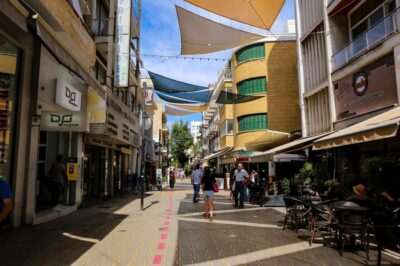
Paphos: Larnaca & Divided Nicosia Sightseeing Tour
Read our review →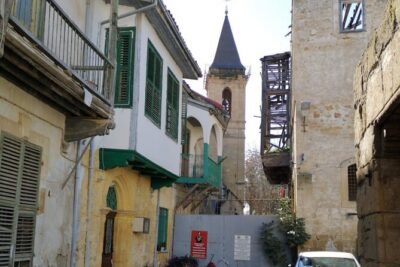
Nicosia: Last Divided City, Tour combining South & North
Read our review →
From Paphos to Divided Nicosia (North Cyprus walk in) and Larnaca
Read our review →Browse the lists this tour appears in